Emergency piping
Pipe Break Repair in Boerne, TX: Burst Lines, Freeze Damage and Fittings Knocked Loose
A split line puts out more water in an hour than most leaks do in a month. Shut the water off first, then call, and we will talk you through both.
Or call (833) 571-0120 and describe what you are seeing.
Stop the water before you do anything else
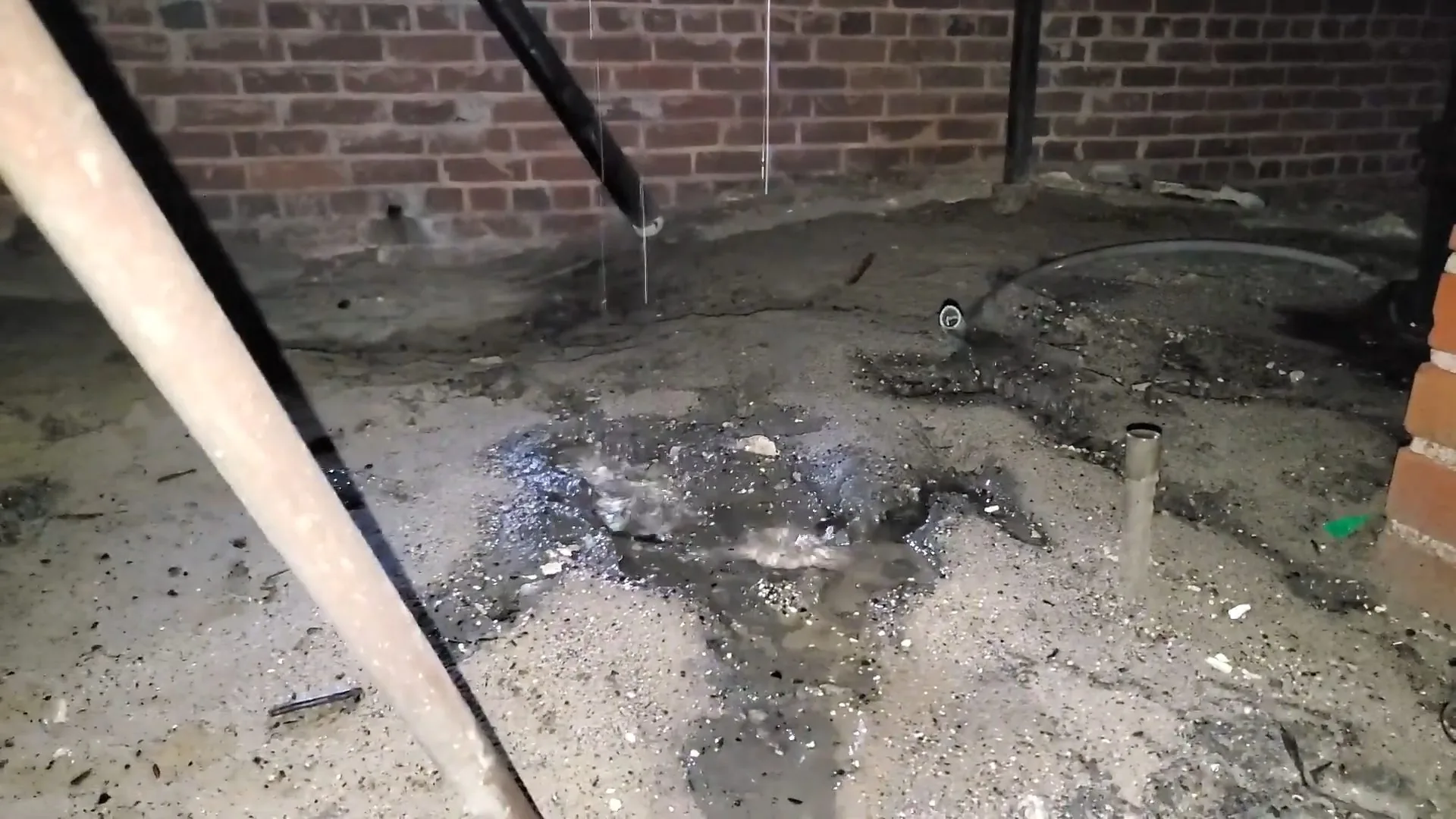
With a burst line the clock matters more than the diagnosis. A split supply pipe under pressure can put hundreds of gallons into a building in an hour, and almost all of the eventual cost is water damage rather than the pipe itself. Boerne pipe break repair starts at the shutoff valve, and the repair itself comes second.
So the order is: stop the water, make the area safe, then call. Everything else can wait a few minutes.
-
Close the main stop tap
Usually near the front hose bib, in a garage wall, or in a box at the property line. A round handle needs several turns; a lever needs a quarter turn to sit across the pipe.
-
Open a low cold tap
The lowest one in the house, often outside. That drains the pressure out of the system instead of pushing it through the split.
-
Kill power to the water heater
Breaker for electric, gas control valve for gas. An element firing in a drained tank turns one problem into two.
-
Keep clear of water near electrics
If water is anywhere near a panel, an outlet or an appliance, treat the area as unsafe and isolate the circuit if you can do so from a dry position.
-
Then call, and describe it
Where it is, what it is running onto, and whether you managed to stop it. That decides what we bring.
Why pipes let go here, and when
Two patterns dominate, and they arrive at opposite ends of the year.
Hard freezes
The Hill Country gets occasional severe cold snaps rather than a sustained freezing season, which is precisely what makes freeze damage so common. Pipework in unheated garages, attics, crawlspaces and exterior walls is often not protected to the standard a reliably cold climate would demand, because for most of the year it does not need to be.
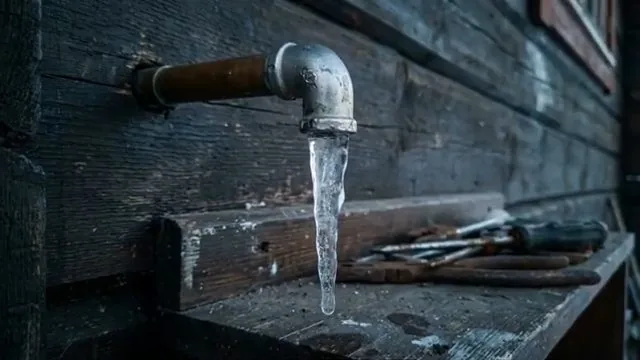
The classic failure is a hose left connected to an outside tap over winter. Water trapped in the bib freezes, expands and splits the body, and the split frequently does not show until the first warm day when someone turns it on and water appears inside the wall.
Ground movement in dry spells
Buried service lines fail for the opposite reason. Cow Creek Groundwater Conservation District recorded a monitored well at 10.95 feet below its September average on 28 September 2026, with September rainfall of 0.49 inches against a 3.82 inch average. Soil that dries out shrinks, and shrinking soil loads anything rigid buried in it until a joint or a fitting gives.
Worth doing before the first cold snap
- Disconnect every garden hose from every outside tap
- Fit insulated covers on exposed hose bibs
- Insulate any pipework running through a garage, attic or crawlspace
- Find your main stop tap now and check it actually turns
- If the property will be empty through a freeze, isolate and drain rather than leaving it live
What a repair involves
-
Isolate and expose
Water off, then open up only as much as is needed to see the failure. Where the split is buried, locating it precisely first is what keeps the hole small.
-
Assess the run, not just the split
A pipe that has frozen once has usually frozen along a length. We check either side rather than patching the obvious point and leaving the next one.
-
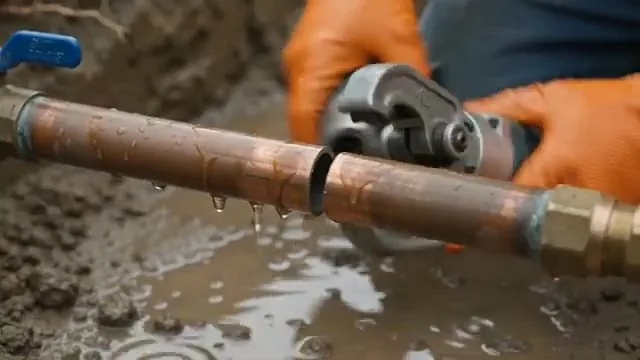
Replace the section
Cut back to sound pipe and replace, rather than clamping. A clamp is a way to get through a night, not a repair.
-
Pressure test
Before anything is closed up. Finding the second split after the wall is patched helps nobody.
-
Make safe and advise on drying
We stop the water and repair the pipe. Where the building is wet, that is separate work.
Where water has already soaked into floors, walls or ceilings, extraction and structural drying are covered on our water extraction and drying page. Where the failure turns out to be a slow weep rather than a split, that is a leak search instead, and a different job.
Commercial burst pipes: isolate the section and document the failure
On a commercial site the calculation is different, because the cost is usually lost trading rather than the repair. The priorities are isolating the smallest possible section so the rest of the building keeps operating, and getting a defensible record of what failed and when for the insurer.
Knowing where the isolation points are before something fails is worth more than any emergency number. If nobody on site can answer that question, it is worth half an hour with us on a quiet day. Broader maintenance for commercial properties has its own page.
Cannot stop the water? Call and describe what you see
If water is running now and you cannot stop it, call rather than read. We can talk you to the stop tap.
Call (833) 571-0120Burst pipe questions from Boerne
A pipe burst. What do I shut off first?
The main stop tap, which is usually near the front hose bib, in a garage wall, or in a box at the property line. Turn it clockwise until it stops, then open the lowest cold tap in the house to drain the pressure out of the system. Switch off power or gas to the water heater if the tank is involved. If water is near electrics, keep clear and isolate the circuit only if you can reach it from a dry position. Then call.
What does burst pipe repair cost?
The pipe repair itself is often a smaller figure than people expect; the cost of a burst is usually the water damage. An accessible internal section is a modest job, a buried service line across a lot costs more because of the excavation, and anything under a slab moves into different territory. Our cost page carries wide ranges. The honest point is that an hour less of running water matters more to the final bill than the hourly rate does.
Do I need a permit for a burst pipe repair?
An emergency repair to an existing line generally does not hold the work up, but replacing a run or a service line normally does fall inside the permitting regime. Boerne has adopted the 2021 International Plumbing Code and requires contractors to be registered with the city to work inside city limits and submit permit applications. We handle that side, and Permitting and Code Compliance on (830) 248-1529 can confirm anything specific.
How do I check the plumber is licensed when I am calling in a hurry?
Texas licenses plumbers through the Texas State Board of Plumbing Examiners, which runs a public license lookup. In an emergency most people call first and check afterwards, which is understandable, but you can still ask for the license number when the plumber arrives and verify it while the work is quoted. Boerne also requires contractors to be registered with the city.
How do I stop this happening again next winter?
Disconnect every hose from every outside tap before the first cold snap, which is the single highest-value thing on the list. Fit insulated covers on exposed hose bibs, insulate pipework running through garages, attics and crawlspaces, and make sure you know where the main stop tap is and that it actually turns. If the property is going to be empty through a freeze, isolating and draining it beats leaving it live and hoping.
Pipe gone right now?
Stop the water at the main before anything else. Then call and tell us where it is and what it is running onto.