Commercial
Commercial Plumbing in Boerne, TX: Scheduled Servicing, Floor Drains and Leak Location for Shops and Workshops
Scheduled maintenance and repairs for premises around Boerne, worked around your trading hours rather than against them. Tell us the premises and the symptom and we will tell you straight away whether it is our work.
Or call (833) 571-0120 and describe what you are seeing.
Tell us the premises and the symptom first
Commercial inquiries go wrong more often than any other kind, and almost always for the same reason: the caller wanted something that is not plumbing, and nobody said so early enough.
Our own records are blunt about this. Across 35 commercial inquiries, only seven became jobs and eighteen went nowhere at all, which is by a wide margin the worst conversion of anything we track. Reading back through them, the failures are not price objections. They are scope mismatches.
People rang wanting grease trap pumping, which is a waste haulage service rather than a plumbing one. Somebody needed a grate lifted off a yard drain immediately. Somebody had an animal stuck inside a drain. One caller wanted a leak survey across an entire resort. Another was being told by the water department that there was a leak somewhere on a large site and needed it pinned down. Those are five different trades and only some of them are us.
The four things to have ready when you call
- What the premises is: a restaurant, a shop, an office, a church, a clinic, a workshop. It changes everything that follows.
- What is failing, in plain terms, and whether it is getting worse. A slow floor drain and a backing-up floor drain are different urgencies.
- Whether you can trade through it. This decides scheduling more than anything else does.
- Your quiet hours, and who on site can let someone in during them.
What we will say if it is not ours
We will name the trade you actually need and get off the phone. That is cheaper for you than a call-out that ends in the same sentence, and it is why this page opens by drawing the boundary rather than claiming the whole category.
Why a planned isolation valve swap beats a Saturday emergency
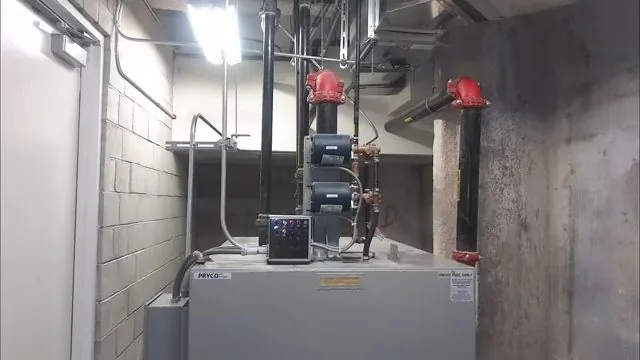
The economics of commercial plumbing are not really about the repair. They are about when the repair happens. The same failing isolation valve is a planned twenty-minute swap on a Tuesday morning before opening, or it is an emergency during a Saturday service with the water off and customers leaving. The part costs the same in both cases and nothing else does. If you are comparing commercial plumbing companies in Boerne, Texas, ask how each quote treats the trading time lost around the repair.
That is the whole argument for a maintenance interval, and it is worth being concrete about what maintenance actually looks at rather than treating it as a vague visit.
What a maintenance visit is actually checking
- Every isolation valve on the site, individually, because a valve that has not moved in five years is a valve that will not close when you need it to. This is the single most useful item on the list.
- Floor drains and their traps, including whether the trap seals are still holding or drying out and letting odour through.
- Grease interceptor condition, separately from pumping, which is somebody else's service.
- Water heater or riser condition, including relief valves and any recirculation that has quietly stopped working.
- Fixture count against actual use, because premises change use far more often than their plumbing gets reassessed.
- Anything that has been patched since the last visit, which is frequently where the next failure comes from.
The pattern worth interrupting is the one where small symptoms get absorbed into the daily routine. A toilet that needs the handle held, a tap that drips, a floor drain that is slow after a busy night: staff stop reporting them because they have learned to work around them, and the first time management hears about any of it is when something stops entirely. A visit interval exists mostly to catch the things nobody is reporting any more.
Restaurants, and the grease question
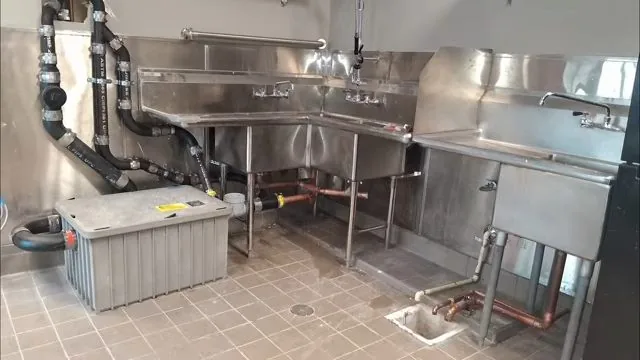
Food service is where commercial plumbing gets its own rulebook, and it is also where our inquiry records show the clearest mismatch between what people ask for and what a plumber sells. A caller asking for grease trap service usually wants the interceptor emptied, which is a pumping and waste disposal job. What we deal with is the plumbing around it: the drainage into it, the condition of the unit and its fittings, and the lines downstream that suffer when it is not working.
On the regulatory side, we would rather point you at the City than tell you what your obligation is. Requirements for food service premises vary by jurisdiction and by the specifics of the premises, and we could not establish Boerne's current requirement from a published City source, so we are not going to state one as fact. Permitting and Code Compliance at 447 N. Main Street can tell you what applies to your premises on (830) 248-1529. Boerne has adopted the 2021 International Plumbing Code, and contractors must be registered with the City to work within the city limits, which is something you can ask any contractor to confirm.
What goes wrong in kitchens here, in rough order of frequency
- Lines downstream of an interceptor that is not doing its job, which is the expensive version of a low-cost maintenance item.
- Floor drains that back up during service, usually solids rather than grease, and usually in the same one drain every time.
- Trap seals drying out in drains that see little water, which puts drain odour into a dining room.
- Hand sink and prep sink waste runs that were added during a fit-out and never had enough fall.
- Dishwasher and combi oven connections, where the appliance is fine and the plumbing serving it was sized for whatever was there before.
On timing in a kitchen
Nothing in a working kitchen gets fixed between eleven and two. We would rather book the unglamorous slot at seven in the morning and be gone before prep starts than attend at a convenient time for us and inconvenient time for the only revenue you have that day.
Trading through a plumbing problem, or trying not to? Tell us the premises and your quiet hours and we will schedule around them.
Call (833) 571-0120Premises we work on around Boerne
Boerne's commercial stock splits into two fairly distinct problems, and knowing which yours is tells you a lot about what to expect.
There is the older core: Main Street and the surrounding historic district, where limestone buildings have had plumbing added, altered and re-routed over a long period. Work there is mostly archaeology. Pipe runs are not where drawings say they are, several generations of material meet in the same wall, and isolation is frequently the hardest part of a small job, because nobody can say with confidence what a given valve actually shuts off. We allow time for that rather than discovering it on the clock.
Then there is everything built during the growth of the last two decades, including the newer commercial development out toward the interstate. Those premises have sane, documented plumbing, and their problems are use-related instead: a unit fitted out for one trade now operating as another, fixture counts that no longer match occupancy, and drainage designed for an original layout that has since been reconfigured twice.
- Restaurants, cafés and bars, where the drainage and the interceptor do most of the suffering.
- Retail units, where the plumbing is small but a failure closes the shop.
- Offices and professional suites, mostly washroom work, water heaters and the occasional riser problem.
- Clinics, dental and veterinary premises, where downtime is booked appointments rather than footfall.
- Churches and halls, which have the unusual profile of heavy intermittent use and long idle periods, and dried-out trap seals to go with it.
- Workshops and light industrial premises, where floor drains and isolation matter more than fixtures do.
Emergencies on commercial premises run through the same dispatch as everything else, and the plumbing FAQs explain what counts as urgent. If a leak on a larger site needs locating before anything can be repaired, which was the most common commercial inquiry in our records by some distance, that is locating the leak, and a drain failing repeatedly in the same place usually needs a proper drain clearing followed by a camera rather than another rod through it.
Clauses to read in a commercial plumbing agreement before the rate
Most commercial plumbing agreements are vague in the places that matter and specific about things nobody cares about. If you are being offered one, by us or by anyone else, these are the clauses worth reading before the rate.
-
A response time with a definition attached
Four hours from when? From the call, from the start of the next working day, or from when someone acknowledges the email? An undefined response time is not a commitment.
-
What the visit includes against what is billed
The checks in the maintenance list should be included and named. Parts and remedial work are normally separate, which is fine, as long as the boundary is written down rather than discovered.
-
What after-hours means in practice
Which hours, which days, what happens on a public holiday, and whether the rate differs. This is where disputes actually happen.
-
Access, keys and who is called
Who holds keys or codes, who is phoned first, and who can authorize spend without a second call. A plumber waiting outside a locked unit is billable time doing nothing.
-
A record you can actually use
Each visit should leave a note of what was checked, what was found and what was deferred. The deferred list is the valuable part, because it is next year's budget.
No figures on this page
Commercial work varies too much by premises, fixture count and access for a number here to be anything but misleading, and we are not going to publish one that we would have to walk back in the first phone call. Our domestic price ranges show how we think about pricing. For a premises, tell us the fixture count and the trading pattern and we will give you something specific to your site.
Commercial questions from Boerne businesses
Can you empty our grease interceptor?
No. Emptying it is a pumping and waste disposal service, done by a licensed hauler who takes the waste away and gives you the paperwork. That came up repeatedly in our inquiry records and it is the most common reason a commercial call does not turn into a job, so it is worth saying before you spend time on it. What we do is the plumbing side: the drainage into the unit, the condition of the unit and its fittings, and the lines downstream that start blocking when it is not working properly.
Can you work outside our opening hours?
Often, and for most premises that is the sensible way to do it. The cost of commercial plumbing is rarely the repair itself, it is the trading time lost around it, so scheduled work generally wants the quietest slot you have rather than the most convenient one for us. What makes that work is access: somebody who can let a plumber in, or keys and a code arranged in advance. Tell us your quiet hours when you call and we will say what can be arranged.
Do I need a permit, and does my plumber need to be registered with the city?
Boerne requires contractors to be registered with the City to work within the city limits, and that is a fair thing to ask any contractor to confirm before they start. The City has adopted the 2021 International Plumbing Code. Whether your particular job needs a permit depends on what it is, and rather than guess, Permitting and Code Compliance at 447 N. Main Street will tell you on (830) 248-1529. For a commercial fit-out or a change of use it is worth that phone call early, because the answer sometimes changes the scope.
How often should a small premises actually be looked at?
It depends on the trade far more than the size. A kitchen puts grease, solids and heat through its drainage every single day and wants looking at several times a year. A retail unit with one washroom can go much longer. A church or hall is the odd case, because long idle periods dry out trap seals and the problem shows up as odour rather than blockage. The honest way to set an interval is to look at the premises once, see what condition things are in, and set it from that rather than from a standard package.
What does commercial plumbing cost compared with domestic work?
The hourly element is not usually the difference. What moves a commercial price is access, isolation and timing: whether the work can be done inside trading hours, how long it takes to establish what a given valve actually shuts off, and whether anything has to be staged across several visits to keep the premises open. On older Main Street premises the isolation question alone can be most of a small job. We will not publish a figure for a premises we have not seen, because fixture count and access vary too much for it to mean anything. Our domestic pricing shows how we range work, and for a premises we would rather look once and give you something specific.
The water department says we have a leak but nobody can find it. Can you?
That was the most common commercial inquiry in our records, so you are in company. The approach is the same as on a house but the site is bigger and the isolation harder, which is where most of the work actually goes. It starts by confirming the loss is real and on your side of the meter, then isolating the site in sections to narrow down which part is losing water, then locating within that section. On a larger site expect this to be staged rather than solved in one visit, and expect the isolation plan to be the difficult part. The method for finding a leak is covered in more detail.
Want to set a service interval for your premises?
Tell us the premises type, the fixture count and your quiet hours, and we will tell you what a sensible visit interval looks like.