Kitchen plumbing
Garbage Disposal Repair in Boerne, TX: A Seized Motor, a Drip Underneath or a Full Replacement
A unit that hums without turning, jams repeatedly, or has started dripping into the cupboard underneath. Three different problems with three different answers.
Or call (833) 571-0120 and describe what you are seeing.
Humming, jammed, or leaking: they are not the same fault
A disposal that hums but does not turn has power reaching it and something stopping the plate. That is usually a jam, and it is often fixable in a few minutes. A disposal that does nothing at all when you flip the switch has either tripped its own reset, lost power at the breaker, or burnt out its motor. A disposal that works perfectly well but leaves water in the cupboard underneath is a seal or a connection problem, closer to ordinary fixture work and has nothing to do with the motor at all. For garbage disposal repair, Boerne TX households can often clear a jam from the underside with a hex key before booking anyone.
Working out which of the three you have takes about thirty seconds, and the first one you can often sort out yourself without paying anyone.
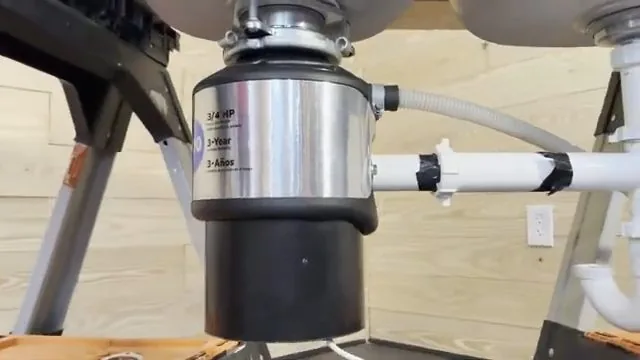
Try this before you call us
If it is humming, this clears it more often than not, and we would rather tell you than charge you for it.
-
Switch it off at the wall and at the breaker
Not just the switch. The whole point of the next step is that your hand goes near the plate, so the unit needs to be genuinely dead, not merely off.
-
Find the hex socket underneath
There is a hexagonal hole in the center of the base of most units, and usually a small Allen key taped to the side or supplied in the box.
-
Work the plate back and forth
Turn the key both ways. You are trying to release whatever has wedged between the impeller and the ring, which is frequently a bone fragment, a fruit stone or a bottle cap.
-
Look inside with a torch
With the power still off, remove whatever you have just released by hand. Never run the unit to clear something you can see.
-
Press the reset button
A small red or black button on the underside. Restore power, press it, then run cold water and switch the unit on.
If that does not do it
A unit that still hums after being freed, trips its reset repeatedly, or smells of burnt motor is telling you the motor has had enough. At that point you are looking at a replacement rather than a repair, and it is worth knowing that before paying for a call-out to be told the same thing.
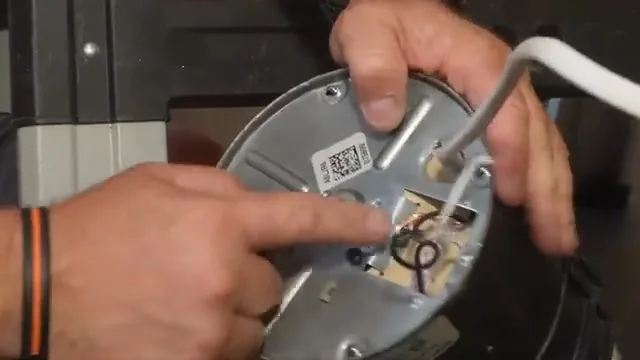
Water in the cupboard is a separate job
A leaking disposal is one of the more common calls in this category, and it is worth saying clearly that the motor is almost never the cause. Water appears for one of a handful of reasons, and where it is dripping from tells us which.
A leak at the top, where the unit meets the sink, is usually the mounting flange and its plumber's putty seal giving up. A leak from the side is generally the dishwasher inlet connection or the discharge tube gasket. A leak from the very bottom of the body, around the base, is the internal seal, and on most units that means the unit itself is finished rather than repairable.
The practical consequence is cabinet damage. A slow drip into a chipboard cupboard base does more expensive harm over three months than the disposal is worth, so it is worth catching early. If you have found water under there, put a tray under it and have a look at where the drip actually starts before anything else.
Repair it, or put a new one in
| What is wrong | Usual answer | Why |
|---|---|---|
| Jammed, clears with the hex key | No work needed | You have already fixed it |
| Trips the reset occasionally | Repair or adjust | Often an overload habit rather than a fault |
| Leaking at the sink flange | Repair | Reseat and reseal the mount |
| Leaking at the dishwasher or discharge connection | Repair | Gasket or connection, straightforward |
| Leaking from the base of the body | Replace | The internal seal is not a serviceable part |
| Hums with nothing jammed, or smells burnt | Replace | Motor has failed |
| Unit is over about ten years old and has a real fault | Usually replace | Parts and labor approach the cost of a new unit |
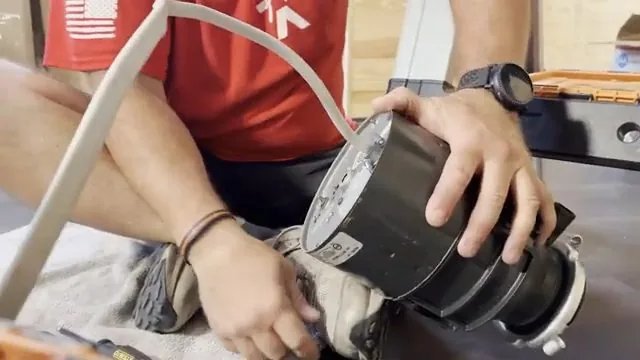
Fitting a new unit is a short job on an existing installation: isolate the power and the water, disconnect the discharge and the dishwasher inlet, release the old unit from the mount, reseal and fit the new one, then run it to check for leaks at every joint. The one thing worth getting right is matching the unit to the sink and the household rather than fitting the cheapest thing that bolts on.
Worth a quick call either way
Not sure whether yours is a five-minute fix or a dead motor? Describe the noise on the phone and we will usually know.
Call (833) 571-0120Disposal questions from Boerne kitchens
What should never go down a disposal?
Fibrous vegetable waste like celery and artichoke, which wraps round the impeller rather than breaking up. Starchy items like pasta and rice, which swell in the trap below. Coffee grounds, which pack into a dense sludge. Fats and cooking oil, which go down liquid and solidify in the line. And anything hard: bones, fruit stones and shells. Most of the jams we clear are one of those five, and running cold rather than hot water while the unit works helps the rest.
What does a disposal repair or replacement cost?
A jam you clear yourself costs nothing. A seal or connection repair is at the modest end of our work. A replacement unit plus fitting depends mainly on the unit you choose, and the spread between a basic model and a quieter, higher-powered one is wider than the cost of fitting it. Our cost page gives wide ranges, and we will quote before starting.
Does a new disposal need a permit, and does a licensed plumber have to fit it?
Swapping a disposal on an existing, correctly installed connection is normally straightforward work. Where it involves changing drain or electrical arrangements, that is a different matter, and Boerne requires contractors to be registered with the city for permitted work. On licensing generally, Texas plumbers are licensed by the Texas State Board of Plumbing Examiners and you can check a license number through its public lookup before anyone starts.
Why does my disposal smell?
Usually a film of food residue on the underside of the splash guard and the upper chamber, which is above where the water normally reaches. Lifting the splash guard and cleaning underneath it deals with most of it. Running cold water for a good twenty seconds after the grinding noise stops is what stops it building up again, because the waste needs to get all the way down the line rather than just out of the chamber.
Can a blocked disposal cause the other sink to back up?
In a double sink, yes, and it is a common pattern. The two bowls share a trap and a discharge, so a blockage below the disposal shows up as water rising in the other bowl when the unit runs. If that is what you are seeing, the problem is usually in the shared waste rather than in the disposal itself, which is drain work, which moves it onto our drain cleaning page.
Disposal playing up?
Tell us what it does when you switch it on. The noise it makes, or does not make, is most of the diagnosis.