Sewer and mains
Sewer Line Replacement in Boerne, TX: Cracked, Bellied or Collapsed Laterals and Your Repair Options
When every fixture in the property is slow, or waste comes up in a shower when a toilet is flushed, the problem is the main line rather than a drain.
Or call (833) 571-0120 and describe what you are seeing.
How a lateral problem announces itself
A blocked branch affects one room. A failing sewer lateral affects the whole property, because every fixture in the building eventually feeds into it. That distinction is the fastest diagnostic you have and you can make it yourself before calling anyone. For sewer line replacement, Boerne homes usually start with a camera run, which shows whether the whole line needs replacing or only a section.
The clearest sign is cross-talk between fixtures: flush a toilet and water rises in a nearby shower, or run a basin and a floor drain gurgles. That is waste meeting an obstruction and backing up to the lowest available opening in the house.
- Every fixture in the property draining slowly rather than one
- Water rising in a shower or bath when a toilet is flushed
- Gurgling from a different fixture when one drains
- Waste backing up at a floor drain or a ground-floor shower
- A persistent smell outside near the run of the lateral
- An unexplained patch of lush or sunken ground along the line
The camera goes in before the quote
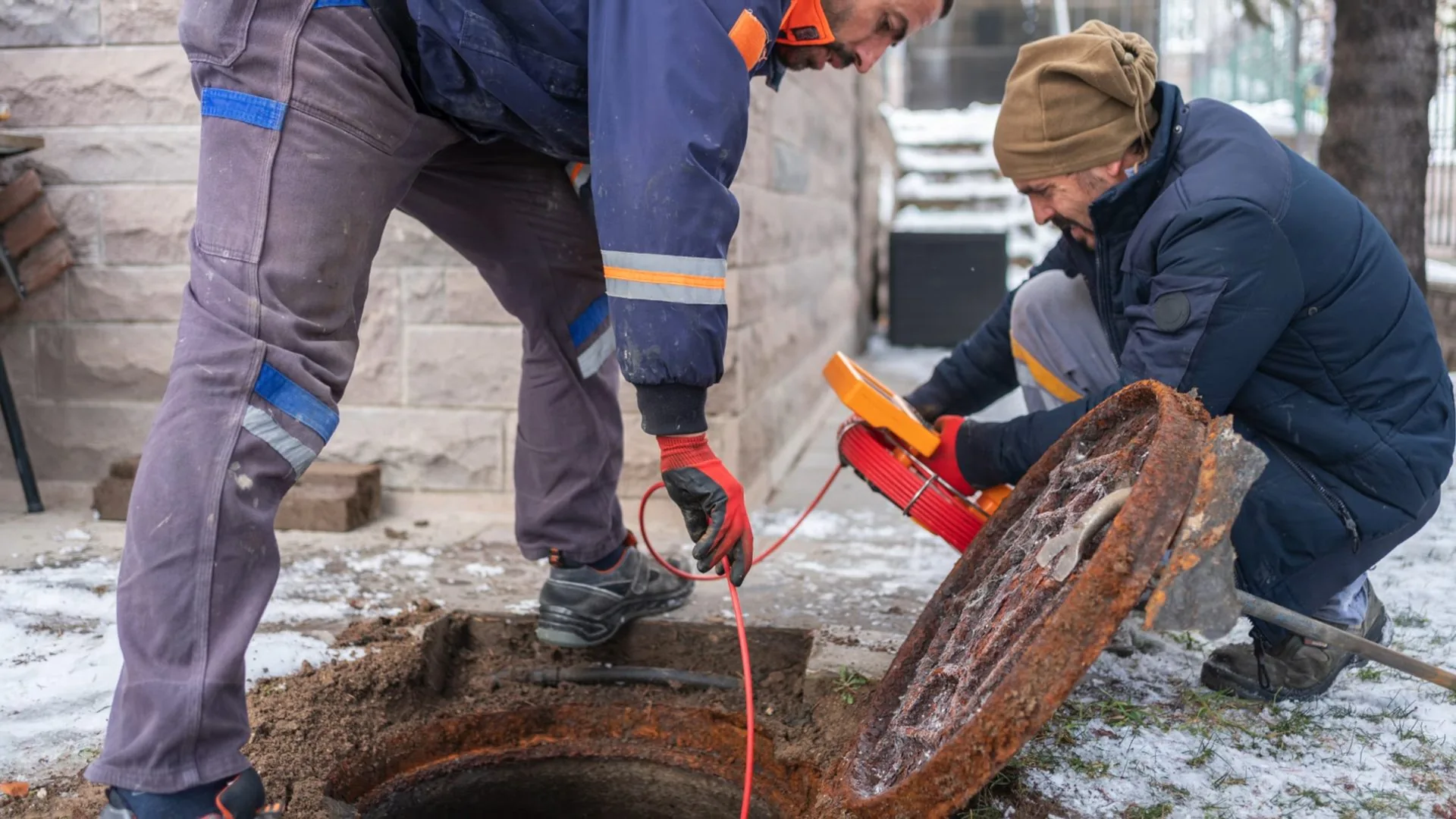
We will not quote a sewer repair from a description, because the difference between the cheapest and most expensive answer is large and the camera is what tells them apart. A line full of roots, a line with a belly, a line with a cracked section and a line that has collapsed all present the same way from inside the house. Any sewer line repair service in Boerne, TX should start the same way, with footage rather than a guess.
The survey gives three things: what the defect actually is, where it is along the run, and how deep. Those decide whether you are looking at clearing, a spot repair, lining or replacement, and they are also what lets a quote be a quote rather than an estimate.
What the footage typically shows
- Root intrusion at a joint, which is the most common finding on older clay and cast iron
- Scale and build-up narrowing the bore, common on cast iron
- A belly, meaning a sag holding standing water that never fully drains
- An offset joint where two sections have moved apart
- A cracked or fractured section, often where ground movement has loaded it
- A collapse, which rules out every option except replacement
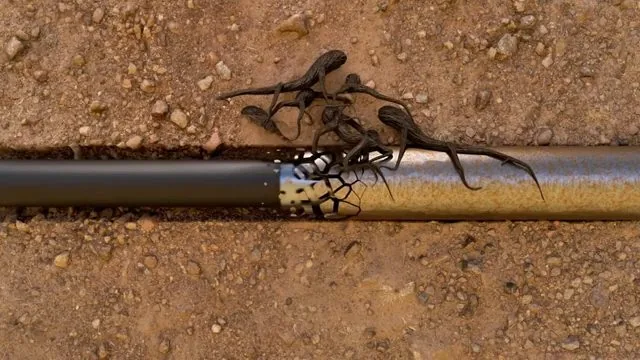
Clearing the main line
Not every main line problem is a failure. Plenty are a blockage in a sound pipe, and the answer is to clear it properly and then find out why it formed.
Mechanical clearing with a cable machine sized to the main handles most of it. Where the line is heavily scaled or root-infiltrated, high-pressure jetting cuts back to the pipe wall in a way a cable cannot. Jetting is the right tool in a sound pipe and the wrong one in a cracked or collapsed pipe, which is another reason the camera comes first.
Where the blockage is on a branch rather than the main, that is ordinary drain clearing and a smaller job.
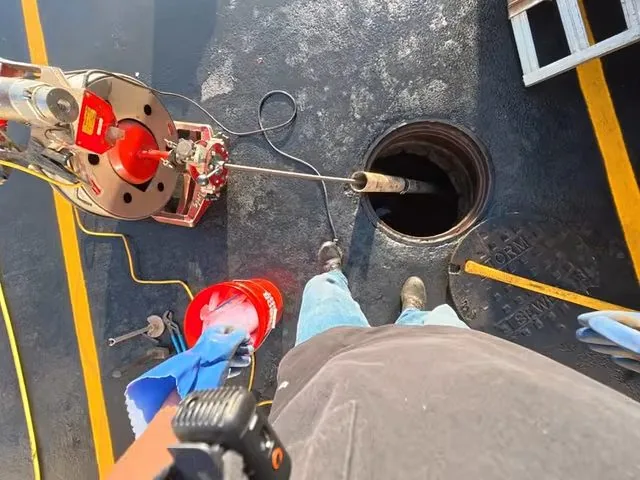
Repairing a section against replacing the run
| Option | Suits | Leaves you with |
|---|---|---|
| Clear and monitor | A blockage in a sound pipe | The same pipe, now clear |
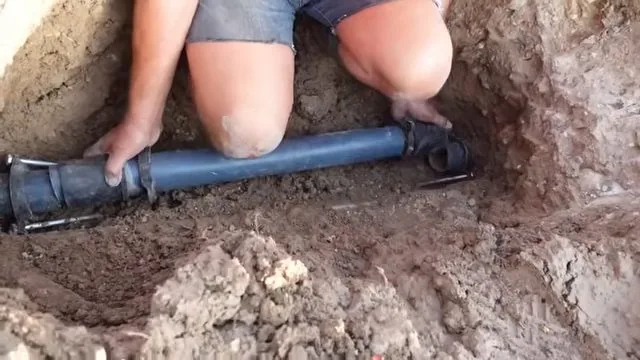
| Spot repair | One cracked or offset section, reachable | Original pipe with a new section |
| Lining the run | Continuous pipe, correct fall, roots or scale | A new jointless bore inside the old pipe |
| Replace the run | Collapse, belly, wrong fall, or a line past saving | An entirely new lateral at the correct fall |
Where lining is the right fit, the method, its limits and the cost comparison against excavation are covered on our no-dig sewer repair page. Where the line has collapsed or sits at the wrong fall, lining cannot help and replacement is the honest answer.
Excavation here has a local cost driver worth knowing about. Boerne sits on limestone-derived soils and bedrock can be shallow, so a trench that would be routine elsewhere can turn into breaking rock. That is a real factor in why the no-dig option often prices better than it first appears.
Commercial and industrial lines
Commercial sewer lines fail on a different timetable from domestic ones, usually because of what goes down them and how continuously. A restaurant lateral carrying grease, or a line serving a building with constant throughput, benefits from scheduled survey and clearing rather than reactive call-outs, because the reactive version always arrives at the worst hour.
We take that work around operating hours. Broader commercial plumbing support beyond the sewer line has its own page.
Waste backing up into the property: stop using fixtures and call
If waste is backing up into the property, treat it as urgent. Stop using the fixtures and call.
Call (833) 571-0120Sewer line questions from Boerne
How do I know whether the line needs replacing rather than clearing?
The camera tells you, and nothing else reliably does. Roots and scale in a structurally sound pipe can be cleared, and the line keeps working. A belly, a wrong fall or a collapse cannot be cleared away, because the defect is the pipe's shape rather than what is in it. If someone quotes you a replacement without putting a camera down first, ask what they are basing it on.
What does sewer line work cost in Boerne?
The range is wide because the options are so different. Clearing a main line mechanically is a few hundred. Jetting is more. Lining a run reaches several thousand depending on footage and diameter, and full excavation and replacement is the largest of the four, particularly here where shallow limestone can turn a trench into rock breaking. Our cost page sets out wide ranges, and the camera survey is what makes a quote meaningful.
Do I need a permit for sewer lateral work?
Generally yes. Boerne has adopted the 2021 International Plumbing Code and requires contractors to be registered with the City of Boerne to submit permit applications and work inside city limits. The Permitting and Code Compliance office at 447 N. Main Street can confirm what your job needs, on (830) 248-1529. On licensing, the Texas State Board of Plumbing Examiners publishes a lookup so you can verify a license number yourself.
Is the lateral my responsibility or the city's?
The split between the property owner's lateral and the public main is set by the utility, and where exactly the boundary falls affects who pays for what. It is worth establishing before work starts rather than afterwards, and Boerne Utilities on (830) 248-1538 can tell you how it applies at your address. We will not guess at it, because being wrong about that is expensive for you.
Why do roots keep getting into the line?
Because older clay and cast iron laterals have joints every few feet, and roots find moisture through them. Once a root system has located a joint it will keep returning, which is why a line cleared in spring can block again by autumn. Clearing deals with the symptom. Lining the run removes the joints the roots are using, which is what actually ends the cycle.
Whole house draining badly?
That pattern is worth treating as urgent, because the next flush has nowhere to go. Call and describe which fixtures are affected.