Water heating
Water Heater Repair in Boerne, TX: No Hot Water, Lukewarm Showers and Leaking Tanks
No hot water, not enough of it, or water showing up under the tank. We test the unit before quoting, and we will tell you plainly when a repair is not the sensible spend.
Or call (833) 571-0120 and describe what you are seeing.
The three ways a water heater usually tells you it is in trouble
Almost every water heater call starts with one of three things. The hot water ran out faster than usual and never really recovered. There is water on the floor around the base of the tank. Or the unit is making a noise it did not make last year. For water heater repair, Boerne homeowners usually need to know first whether a part has failed or the tank has.
Those three point in quite different directions, and the difference matters because one of them is urgent and the others usually are not. Water pooling at the base means the tank itself may be failing, and a failed tank empties its full capacity onto the floor. Reduced output and new noises are generally a part or a sediment problem, which is a scheduled job rather than a drop-everything one.
We test before quoting. That means checking the thermostat and the elements or burner, looking at the anode, the dip tube and the flue, and working out whether what you are seeing is a part at the end of its life or a tank at the end of its life.
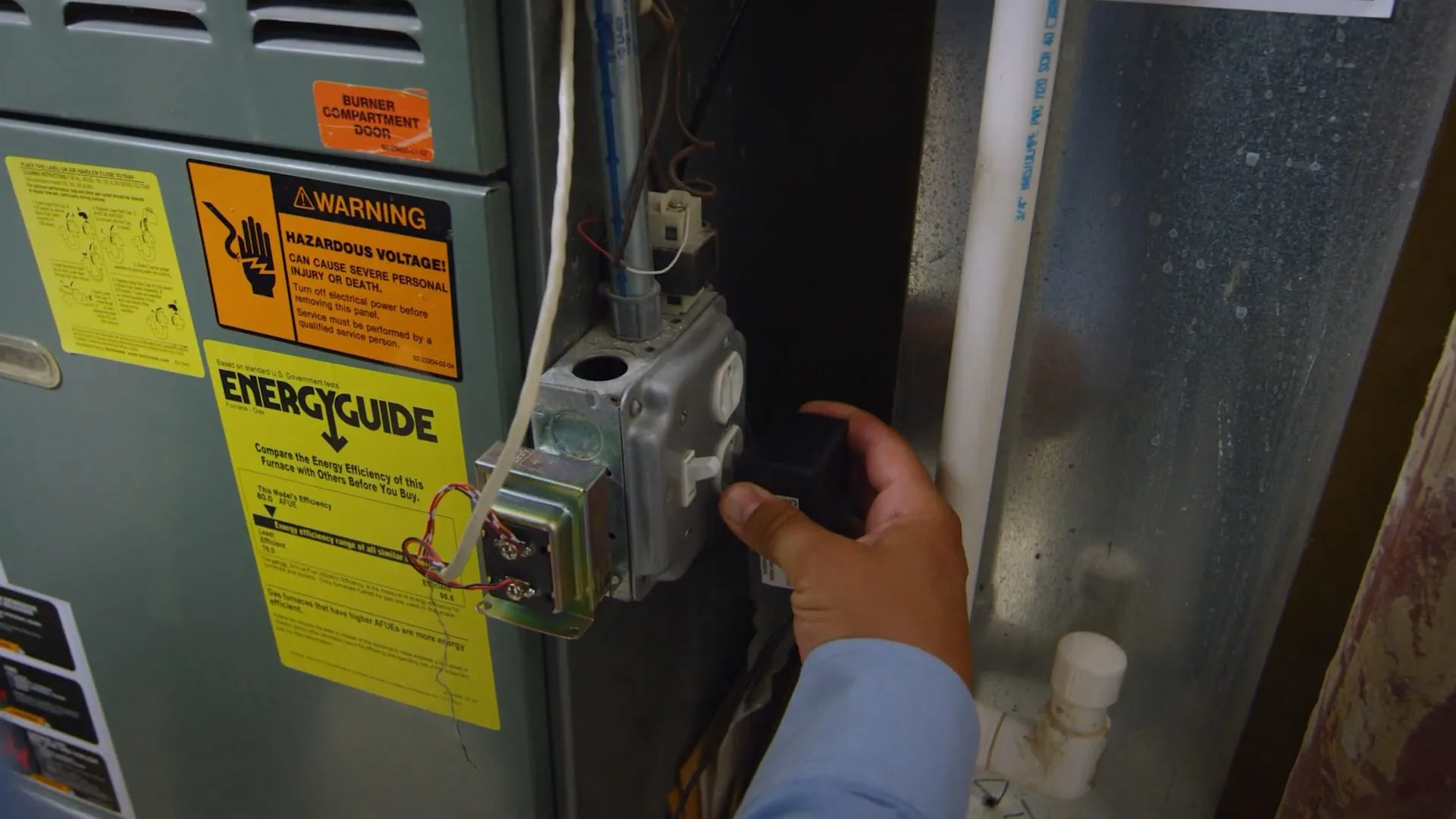
Common water heater symptoms, likely causes and urgency
A rough guide, not a diagnosis. Two units with identical symptoms can need completely different work, which is why we test rather than quote from a phone description.
| What you notice | Usually means | Urgency |
|---|---|---|
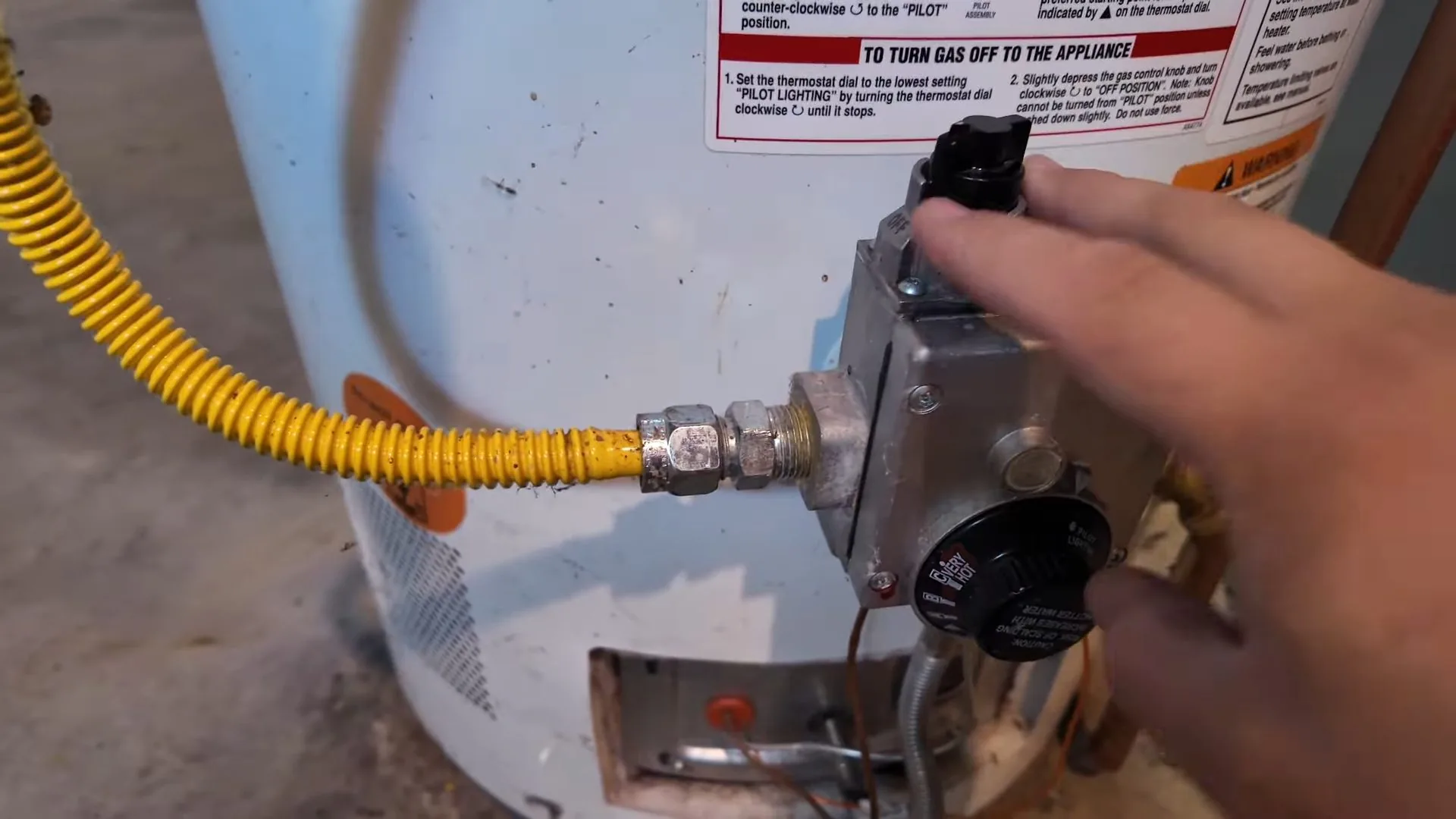
| Water pooling at the base of the tank | A failed tank, a leaking drain valve, or a T and P valve discharging | Shut the water off and call the same day |
| Hot water runs out much sooner than it used to | A failed lower element, a broken dip tube, or sediment taking up volume | Scheduled |
| No hot water at all | A tripped thermostat or breaker, a failed element, or a pilot or ignition fault | Urgent: call first |
| Rumbling or popping while heating | Sediment on the tank floor boiling underneath itself | Scheduled, but it shortens the unit's life |
| Water is hot but discoloured | A spent anode rod, or corrosion inside the tank | Scheduled, worth looking at soon |
| A smell of gas near the unit | A supply or control fault | Leave the building, call the gas utility, then call us |
Gas and electric units fail in different places
An electric tank has two heating elements and two thermostats. When the lower element fails, the top of the tank still heats, so you get hot water that disappears quickly rather than no hot water at all. That specific pattern is one of the more common repairs we do, and it is usually a part swap rather than a replacement.
A gas tank has a burner, a thermocouple or flame sensor, a gas control valve and a flue. The failures look different: a pilot that will not stay lit, a burner that short cycles, or a unit that heats but vents poorly. Venting is the one to take seriously, because a blocked or corroded flue is a combustion safety issue rather than a comfort one.
Either way the age of the unit frames the decision. A four-year-old tank with a failed element is worth repairing without much thought. A twelve-year-old tank with the same fault is a different conversation, and we would rather have it honestly than sell you a part that buys six months.
What we check on a repair visit
- Thermostat settings and continuity, on both thermostats for an electric unit
- Element resistance, or burner, thermocouple and gas control operation
- The temperature and pressure relief valve, and whether it has been discharging
- The anode rod, which is the part that protects the tank wall
- Sediment depth, and whether a flush is worth doing or would do harm at this age
- Connections, flex lines and the drain valve for the actual source of a leak
- Flue draw and combustion on a gas unit
Is Boerne water really hard on water heaters?
You will hear locally that Boerne is hard-water country and that it eats water heaters. That is partly true and worth being precise about, because the answer is different depending on where your water comes from.
The City of Boerne's 2025 drinking water quality report, system TX1300001, puts the 2025 supply at roughly 79 percent surface water, mostly purchased from the Guadalupe-Blanco River Authority's Western Canyon project at Canyon Lake, with about 21 percent groundwater from the Trinity Group aquifers. A house on city supply is therefore not running on straight limestone groundwater. A property on a private well out past the city system often is, and those are the tanks where scale and sediment do the most damage.
What that means practically: if you are on a well and your tank is rumbling, sediment is a very likely contributor and worth addressing. If you are on city supply, we would rather look at the actual unit than assume scale is the culprit.
A number we are not going to quote you
We have not published a grains-per-gallon hardness figure for Boerne because we could not confirm one from the city's own report, and the figures circulating locally come mostly from companies that sell softeners. If hardness matters to your decision, Boerne Utilities will give you the current number on (830) 248-1538, or we can test your water at the tap.
Before you call, if water is actually escaping
If the tank is leaking, shut the water off at the unit first and then call. We can talk you through it on the phone.
Call (833) 571-0120Repair, or stop spending on it
We will quote a repair where a repair makes sense, and say so where it does not. The honest dividing lines are age, what has already failed, and whether the tank wall itself is involved.
A repair is usually the right call when
- The unit is under about eight years old and the tank itself is sound
- The fault is a thermostat, element, thermocouple, gas control or valve
- This is the first real failure the unit has had
- The leak turns out to be a fitting, a flex line or the drain valve rather than the tank
Replacement is usually the better spend when
- The tank wall is weeping or corroded, which no repair addresses
- The unit is past about twelve years and a significant part has failed
- You have had two or more faults in a couple of years
- The household has outgrown the tank, which is common here given how fast the town has grown
If other fixtures need attention while we are there, say so when you book. Tap and valve work is quick once someone is on site, and doing it in the same visit costs less than a second call-out; our faucet and sink repair page covers that work.
If replacement is where it lands, that moves to our tank replacement page, and it is permitted work: Boerne has adopted the 2021 International Plumbing Code and requires contractors to be registered with the city to pull permits. If a tankless unit is what you are weighing up instead, the sizing and gas-capacity questions are covered on the tankless page.
Water heater questions from Boerne callers
How long should a water heater last here?
A conventional tank generally runs somewhere between eight and twelve years, and the spread is wide because maintenance, sediment and how hard the household works it all matter. Units on private wells with heavier mineral loads tend to sit at the shorter end. If yours is in that band and something significant has just failed, it is worth pricing a replacement alongside the repair rather than deciding twice.
What does a water heater repair cost in Boerne?
It depends on which part has failed and how accessible the unit is, so we test first and quote before any work starts. A thermostat or element is at the modest end, a gas control valve considerably more, and anything involving the tank wall is not a repair at all. Our cost page sets out wide ranges by job type so you can see roughly where a job is likely to land before you call.
Do I need a permit to have my water heater repaired?
Repairs to an existing unit generally do not, but replacement is a different matter. That makes it worth asking early whether the visit is a repair or a swap, because a permit and a contractor registered with the City come with the swap and not with the repair. If the answer changes halfway through the job, expect the paperwork to change with it.
How do I check that whoever comes out is properly licensed?
Plumbers in Texas are licensed by the Texas State Board of Plumbing Examiners, which runs a public license lookup, so you can verify a license number yourself before work starts. Boerne additionally requires contractors to be registered with the city to work inside city limits. Both are reasonable things to ask about, and you should ask them of anyone you hire, including us.
Is it worth flushing an older tank?
Sometimes, and sometimes it does more harm than good. On a unit that has been flushed regularly, clearing sediment helps recovery and noise. On a tank that is ten years old and has never been touched, the sediment layer can be the only thing sitting over a corroded patch of floor, and disturbing it occasionally turns a working heater into a leaking one. We will look at the age and condition and give you a straight answer rather than flushing by default.
Hot water gone?
Describe what the tank is doing and roughly how old it is. That usually narrows it to two or three possibilities before anyone arrives.