Sewer and mains
Trenchless Pipe Repair in Boerne, TX: Relining a Failing Sewer Line Without Tearing Up the Yard
A failing line rebuilt from the inside rather than dug up. On the right pipe it is faster, cheaper once reinstatement is counted, and your driveway stays where it is.
Or call (833) 571-0120 and describe what you are seeing.
What lining actually is
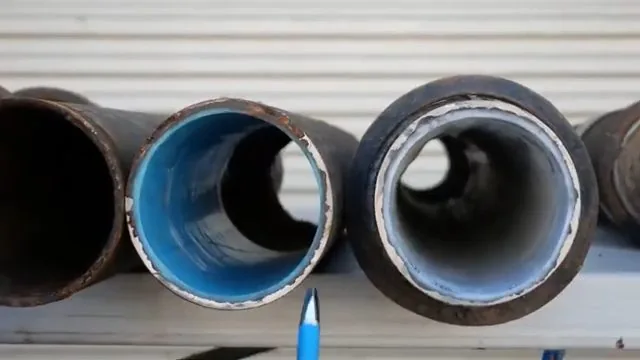
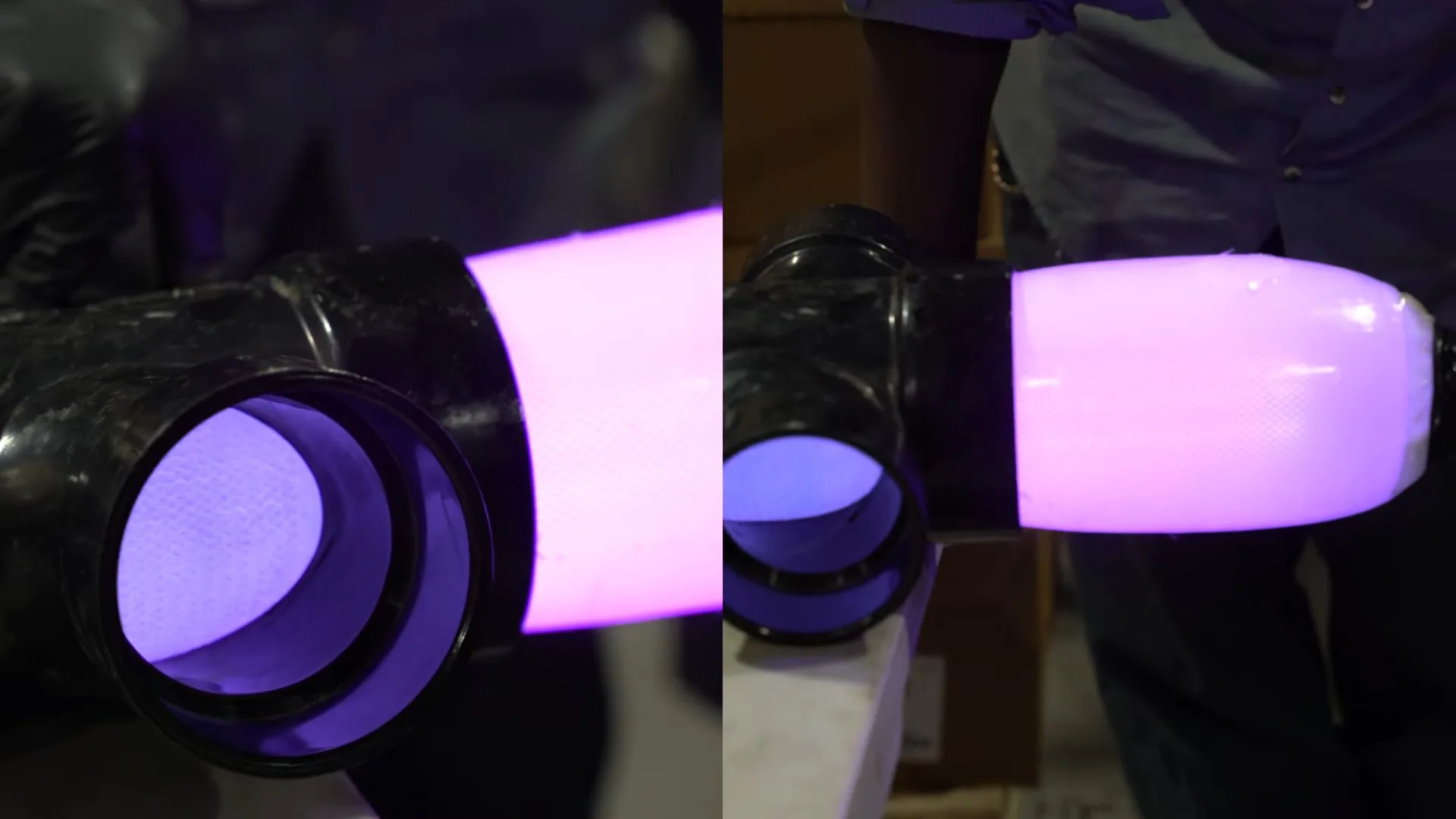
A cured-in-place liner is a resin-saturated sleeve pulled or inverted into the existing pipe and then cured hard. What you end up with is effectively a new pipe formed inside the old one, bonded to it, with no joints along its length for roots to find. For trenchless pipe repair, Boerne homeowners should ask to see camera footage first, because lining suits a pipe that is damaged but still intact.
Two things follow from that. The first is that nothing has to be dug up along the run, which is the whole point. The second is that the new bore is slightly smaller than the old one, which almost never matters on a domestic lateral but is worth knowing rather than discovering. Anyone comparing pipe lining companies in Boerne should ask whether CIPP pipe lining is quoted only after a camera survey, because a lining quote made without footage is a guess.
The method applies to buried drainage and sewer lines. Where the failed line is under a slab rather than in the ground, the equivalent conversation is on our slab leak page, where an overhead reroute is usually the better comparison.
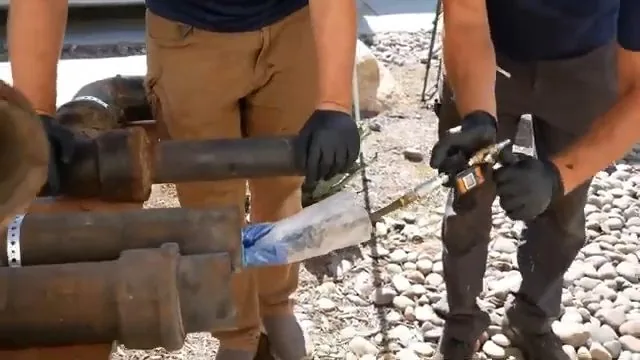
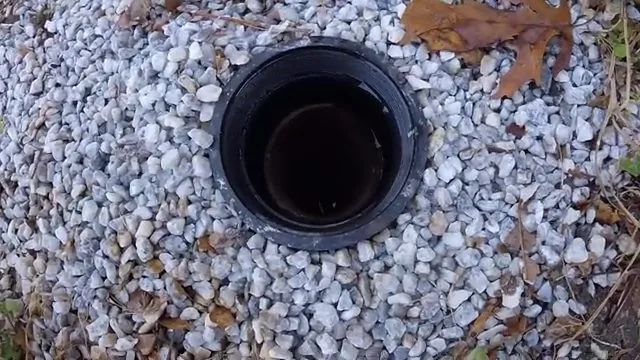
Trenchless against open-trench, honestly
| Trenchless lining | Open-trench replacement | |
|---|---|---|
| Excavation | Access pits only, often just the existing cleanout | A trench along the full run |
| Time on site | Usually a day for a domestic lateral | Several days, longer with hard going |
| Surface reinstatement | Little to none | Driveway, path, planting and irrigation all disturbed |
| Limestone and shallow bedrock | Largely irrelevant; you are inside the pipe | A real cost driver here, sometimes needing breaking |
| Mature trees | Root systems undisturbed | Often the deciding objection |
| Resulting pipe | New jointless bore inside the host pipe | Entirely new pipe at the correct fall |
| Fixes a collapsed pipe | No | Yes |
| Fixes a belly or wrong fall | No | Yes |
| Headline price | Higher per foot | Lower per foot, before reinstatement |
| Price once reinstatement is counted | Frequently lower | Often higher than the quote implies |
That last pair of rows is where most of the confusion lives. Compared on the pipe alone, excavation looks cheaper. Compared on what it actually takes to put the property back, lining frequently wins, and on a lot with a laid driveway, mature trees or shallow limestone it is not close.
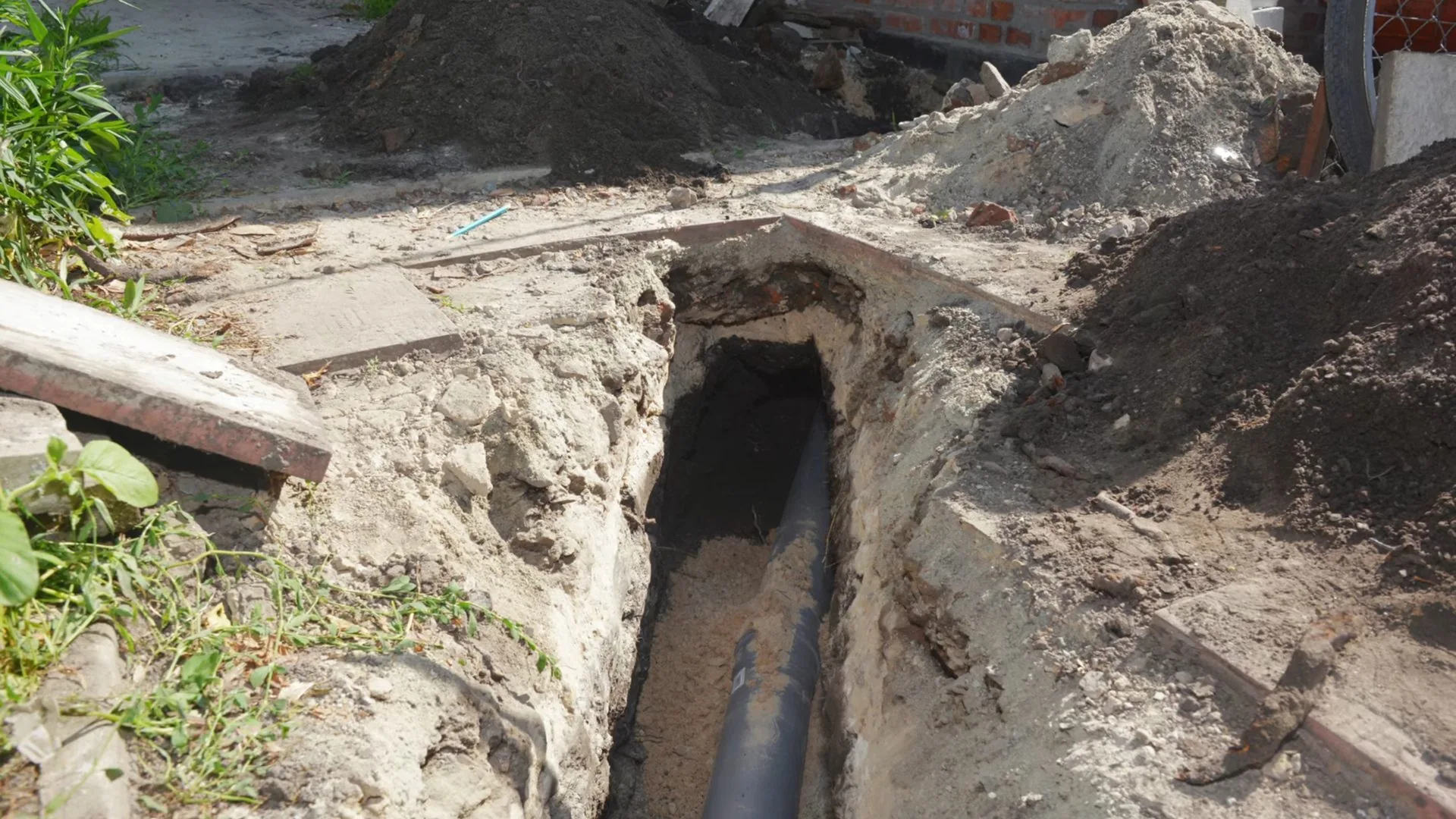
When it works, and when we will tell you it does not
Lining is a good fit when
- The host pipe is cracked, scaled or root-infiltrated but still structurally continuous
- The fall is correct and the line runs where it should
- The run passes under a driveway, a mature tree, a patio or a planted area
- Access exists at one or both ends through a cleanout
- You want the property back in use quickly
Lining is the wrong answer when
- The pipe has collapsed, because there is nothing left to line
- There is a belly holding standing water, which lining preserves rather than fixes
- The fall is wrong, for the same reason
- The line is badly offset at a joint
- The diameter is already marginal for the property
This is why we camera first rather than quoting a method from a description. If the footage shows a collapse or a belly, lining is not an option and we would rather say that at the survey than halfway through. In that case the work moves to sewer line repair and replacement.
What a trenchless sewer relining visit involves
-
Camera survey and measure
The full run recorded, with the defect located and the length measured. This is also what tells us whether lining suits the pipe at all.
-
Clean the host pipe
Mechanical clearing and, where the condition calls for it, jetting. The liner bonds to the pipe wall, so scale and roots have to come off first.
-
Open access
Usually the existing cleanout. Where there is no usable access, one small pit rather than a trench.
-
Install and cure
The liner is inverted or pulled through, inflated against the pipe wall, and cured in place.
-
Reinstate connections
Any branch connections along the run are reopened from inside with a cutter.
-
Camera it again
Final footage, which you keep. If it is not right, it gets dealt with before we leave.
Get a camera survey before agreeing to excavation
If you have a quote for excavation and a yard you would rather keep, the camera survey is the thing to do first.
Call (833) 571-0120Trenchless questions from Boerne
When is lining recommended over digging the line up?
When the host pipe is still structurally continuous and the fall is correct, and when the run passes under something you would rather not disturb: a driveway, mature trees, a patio, irrigation. On lots here, shallow limestone is an extra argument for it, because excavation through rock is slow and expensive. If the camera shows a collapse, a belly or a wrong fall, lining cannot fix those and we will tell you so.
What does trenchless lining cost compared with excavation?
Per foot of pipe, lining costs more. Per job, it frequently costs less, because the excavation figure rarely includes putting the driveway, path and planting back. On a run under a laid surface or mature trees the gap usually favors lining by a clear margin. Our cost page gives wide ranges for both, and the camera survey is what lets us quote either accurately.
Do I need a permit, and does a licensed plumber have to do it?
Sewer lateral work generally falls inside Boerne's permitting regime. The city has adopted the 2021 International Plumbing Code and requires contractors to be registered with the city to submit permit applications and work inside city limits. Texas licenses plumbers through the Texas State Board of Plumbing Examiners, and its public lookup lets you verify a license number yourself before work begins.
How long does the liner last?
Manufacturers rate cured-in-place liners in decades rather than years, and the jointless bore removes the main entry point roots use. We would rather point you at the specific product data sheet for whatever we install than quote a round number here, because the figure depends on the resin system and the host pipe's condition. What we will say is that a properly cured liner in a sound host pipe is a long-term repair, not a patch.
Will I be able to use the plumbing while the work is on?
Not during the lining and curing itself, which is the main reason a domestic job is scheduled as a day rather than spread out. We will tell you the window in advance so you can plan around it. That compares with several days of disruption plus an open trench for an excavation, which is part of why most people pick the method that gets the property back fastest.
Told you need the line dug up?
Worth a second look. Not every line suits lining, but plenty that get quoted for excavation do.