Gas lines
Gas Line Repair in Boerne, TX: Pressure Tests, New Runs and What to Do If You Smell Gas
If you can smell gas, this page is the wrong place to start. Leave the building and call the City on (830) 248-1633. For a line that needs testing, repairing or running to a new appliance, we are the right call.
Or call (833) 571-0120 and describe what you are seeing.
If you can smell gas, do this before anything else
An active gas leak is not a plumbing appointment. It is a utility call, and in Boerne the utility is the City itself.
The City of Boerne runs its own natural gas system and publishes what to do: leave the area, and from a safe distance call 911 and the City on (830) 248-1633. That line is answered around the clock, and the City dispatches qualified crews on a gas call at no charge to you. For gas line repair, Boerne is unusual in that the City runs its own gas utility, which is why that call comes first.
The City is also explicit about what not to do, and the instructions are worth following exactly rather than approximately.
What the City tells you not to do
- Do not try to fix it yourself.
- Do not try to find it yourself. That includes going round with soapy water on fittings.
- Do not turn lights on or off. A switch is a spark.
- Do not smoke, and do not use a cellphone inside the building.
- Do not start a vehicle, a mower or anything else that could make a spark.
Why we send this one away
Our own call records make the point better than we could. Across 26 gas line inquiries, 20 were routine and most of those booked. Of the two that came in as live emergencies, neither became a job, because in both cases the right answer was the gas utility and the caller already needed to be outside rather than on the phone to a plumber.
Once the gas is off and the property is safe, the repair that follows is ours. That is the part of this page worth reading.
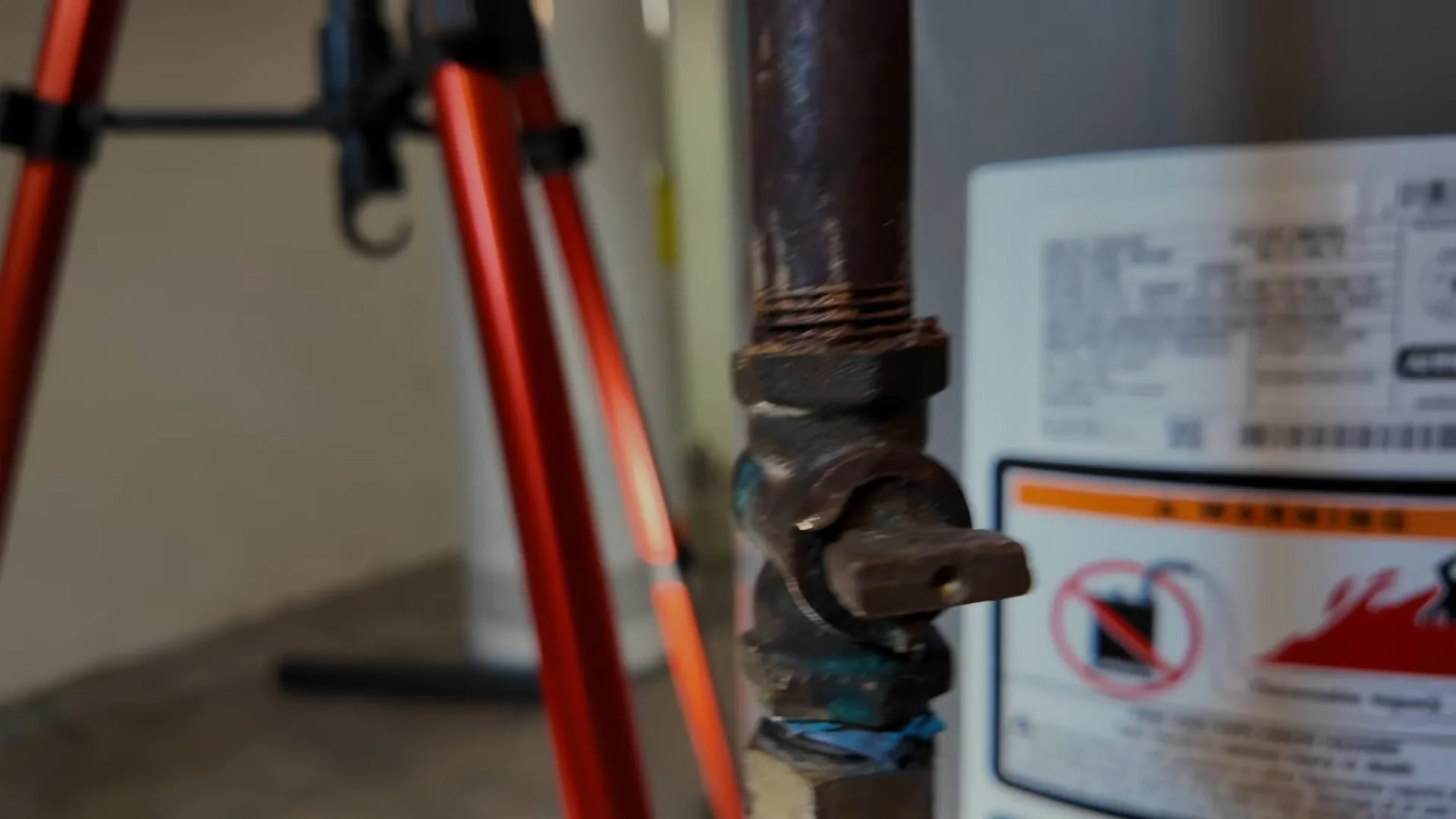
Where the city's gas stops and yours begins
Almost every confused gas phone call comes down to one boundary, and it is worth drawing it properly, because it decides who pays and who you should be ringing.
Boerne's gas system serves roughly 4,000 customers, both inside the city limits and beyond them. The City buys its gas from West Texas Gas and takes it in at points south of town along I-10 and southwest on Scenic Loop Road. Distribution mains run about two inches across at roughly three feet deep. The service lines that branch off to individual properties are half an inch to an inch, buried eighteen to twenty-four inches down. A regulator next to your meter drops the pressure before the gas reaches the building.
The City's own rules define the point of service as the place where your gas line leaves the City's meter. The City owns and maintains the meter. Everything on the house side of it is yours, and the City states plainly that it accepts no responsibility for the adequacy of a customer's installation.
| What is wrong | Whose side | Who to call |
|---|---|---|
| Gas smell anywhere, indoors or out | Treat as the City's until proven otherwise | 911 and the City, (830) 248-1633 |
| Meter damaged, leaking or buried | City | The City |
| No gas at all, whole property | Usually City or the regulator | The City first |
| Line from the meter to the house | Yours | A plumber |
| Pipe runs inside walls, attic or under the slab | Yours | A plumber |
| New run to a grill, range, fireplace or dryer | Yours | A plumber |
| An appliance that will not light or stay lit | Yours, but not pipework | An appliance technician |
If you are outside the gas system
The City says it has no defined gas service area and serves where it is feasible, which means a good deal of Kendall County is not on mains gas at all and runs on propane instead. A propane tank is a different regulatory world, covered further down, and the City emergency number does not apply to it. Your propane supplier's emergency line does.
Six common gas jobs: grill lines, range hookups and fireplaces
Stripped of the drama, gas work on the customer side of the meter is mostly planned and mostly unglamorous. Our inquiry records group into six recognizable jobs.
- A line run out to a grill or an outdoor kitchen. The single most common request, and usually straightforward if the route is sensible.
- A range or cooktop hookup, often after a kitchen change where the new appliance does not sit where the old connector reaches.
- A gas fireplace or insert that has stopped working, where the first question is whether gas is even arriving at it.
- A line somebody has looked at and called rusty, typically an older exterior run or something a home inspector flagged.
- A dryer connection, usually a conversion or a relocation rather than a new run.
- A documented leak test ahead of a sale, which is its own job and gets its own section below.
Two patterns are worth naming because they save a wasted visit. First, the appliance and the pipe are different trades. If a fireplace lights and then dies, or a range burner is uneven, that is combustion and controls rather than pipework, and an appliance technician will get further than we will. We will tell you that on the phone rather than after the call-out. Second, converting an appliance between natural gas and propane is not a plumbing job: it is a manufacturer's orifice kit fitted to that specific model, and the two callers who asked us for exactly that were better served elsewhere.
Three small fittings that cause most of the trouble
The flexible appliance connector is the corrugated tube between the pipe and the appliance. It has a service life, it work-hardens where it has been bent, and the single most common thing we find on an appliance swap is a connector that has been reused across two or three appliances because it looked fine. It is replaced on a swap rather than reused, and that is not an upsell, it is the cheapest item on any gas job.
The sediment trap, which older plumbers call a drip leg, is a short capped stub below the appliance connection that catches debris before it reaches the appliance's own gas valve. The fuel gas code requires one at appliance connections, and it is routinely missing on older installations or quietly left off during a hurried appliance change.
An isolation valve at each appliance is what lets one appliance be worked on without shutting the gas off to the whole property. Plenty of houses here have exactly one point of isolation, at the meter, which turns a twenty-minute job on a range into an afternoon without hot water.
Know which appliance you want connected, or which line needs testing? Tell us on the phone and we will say what the job involves before anyone attends.
Call (833) 571-0120The leak test, and the report buyers ask for
A leak test is not someone sniffing around with a detector. It is a pressure test: the system is isolated from the meter, charged with air or inert gas to a set pressure, and watched on a gauge over a defined period. A gauge that holds is a pass. A gauge that falls means gas is escaping somewhere in the piping, and the next job is isolating sections until the loss narrows to one run.
This matters in Boerne because a market with this much property turnover generates a steady stream of requests for documentation rather than repair. One of the clearest inquiries we have on record was a caller who wanted, in their words, a report saying there is no gas leak in the house. That is a legitimate and separate piece of work, and it is worth asking for it by name.
-
Isolate at the meter
The test covers your piping, not the City's. Everything downstream of the meter is valved off from the supply.
-
Cap the appliance connections
Each appliance drop is capped so the test reads the pipe rather than a cooker valve that was never meant to hold test pressure.
-
Charge and hold
The system is brought up to test pressure and left. The hold period is the test, which is why this is not a five-minute visit.
-
Read, and if it falls, divide
A falling gauge gets sectioned. Isolate a branch, re-test, and the loss either follows the branch or it does not. Repeat until one run is left.
-
Repair, then re-test
A repair is not finished until the same test passes on the repaired system. Anyone who repairs without re-testing has not shown you anything.
Before you ask what a test costs
Two separate callers on our records asked that before anything else, and one asked specifically whether the initial look was chargeable. It is a fair question. Our price guide carries wide ranges rather than a figure we would have to walk back, because a test on a single appliance drop and a test on a sprawling older system with four appliances are not the same piece of work. Ask on the phone and we will tell you which one you are likely to have.
A carbon monoxide alarm is a different emergency
People merge these two problems and they should not. A gas leak is unburned natural gas escaping from a pipe or fitting, and it smells, because an odourant is added so that it will. Carbon monoxide is a product of combustion that has gone wrong, it comes out of an appliance rather than a pipe, and it has no smell at all. A pressure test on your gas piping can pass perfectly while a badly vented water heater fills a hallway with carbon monoxide.
So the two problems have different first calls. A gas smell goes to 911 and the City. A sounding carbon monoxide alarm goes to 911 and the fire service, because they can measure it, and then to an appliance technician to find out which appliance is venting badly. One of our own callers framed this precisely, wanting to establish that there was no carbon monoxide leak, and the honest answer was that this is an appliance and flue question rather than a pipework one.
Appliances worth a second look in this market
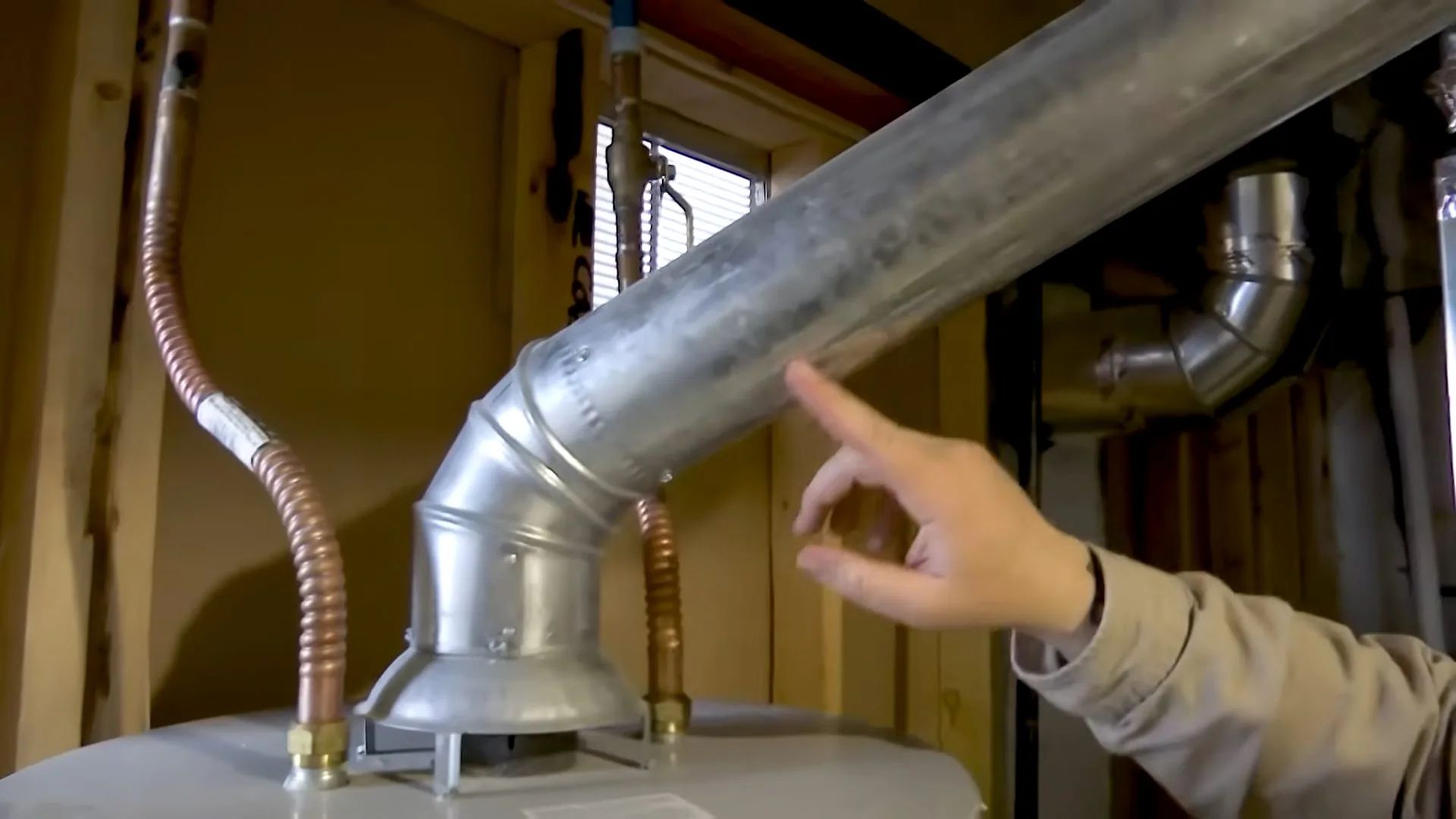
- Attic water heaters, common here and easy to ignore because nobody goes up there. The flue is the part that matters.
- Gas fireplaces and inserts that have sat unused through a Hill Country summer and get lit on the first cold night.
- Any appliance in a closet with a vent that has been painted, boxed in or blocked by storage.
- An older unit that has been moved during a renovation, where the vent run was adjusted to suit the new position.
Gas lines sit 18 to 24 inches down, within reach of garden work
Go back to the City's published figure for a moment: gas service lines sit eighteen to twenty-four inches down. That is shallower than most people assume, and it is comfortably within reach of ordinary garden work. A fence post, a mailbox, a tree, a new irrigation trench and a raised bed all get dug to about that depth, and in a market where a lot of properties are young enough to still be having landscaping put in, that is a real risk rather than a theoretical one.
Call 811 before you break ground. It is the national locate service, it is used in Texas, and it costs you nothing but lead time. The marks it produces are approximate rather than surveyed, so once you are close, dig by hand rather than with a blade. Conditions and depths described on this page are general to the area and are not a survey of your property.
Jobs that hit gas service lines more often than you would think
- Setting fence posts along a side boundary, which is frequently the exact route a service line takes.
- Planting anything with a root ball, because the hole is wider and deeper than the plant.
- Trenching for irrigation or low-voltage lighting, often done at roughly service-line depth.
- Digging footings for a deck, pergola or outdoor kitchen, which is doubly awkward if the point of the structure was a new grill line.
- Grading or scraping for a driveway or pad, where a blade removes cover before anyone notices.
Propane, and the registration worth asking about
Outside the City's gas system, properties run on propane, and propane in Texas is not regulated by the same body as plumbing. The Railroad Commission of Texas oversees LP-gas work. A master or journeyman plumber can hold an exempt registration with the Commission, which allows that individual to service, install and repair LP-gas piping and certain appliances, and it does not extend to recreational vehicle or motor fuel systems.
The detail that matters to you as a homeowner is that the registration belongs to a named person rather than to a company, and it has to be renewed each year at the end of May. So a plumbing license on its own does not tell you whether somebody may work on your propane system. The question to ask, of us or of anyone else, is whether the individual turning up at your tank holds that registration and whether it is current. You can verify a plumbing license separately through the Texas State Board of Plumbing Examiners.
What we will tell you we do not do
- Find or make safe an active gas leak. That is the City on (830) 248-1633, or your propane supplier.
- Repair, service or tune the appliances themselves, including fireplace controls, furnace burners and range ignition.
- Convert an appliance between natural gas and propane, which needs the manufacturer's kit for that model.
- Work on recreational vehicle gas systems or motor fuel systems.
- Anything on the City's side of your meter.
Within the city limits, gas and plumbing work is permitted work and Boerne requires contractors to be registered with the City to work here. Boerne has adopted the 2021 edition of the International Plumbing Code along with the 2021 fuel gas code, and Permitting and Code Compliance at 447 N. Main Street will confirm what a specific job needs on (830) 248-1529. If a line is leaking rather than being replaced, the related work is often a pipe repair of a different kind, and a smell that turns out to be drains rather than gas belongs with drain cleaning instead.
Gas questions we get from Boerne
Who supplies natural gas in Boerne?
The City of Boerne does. It runs its own natural gas utility serving roughly 4,000 customers, inside the city limits and outside them, with gas purchased from West Texas Gas and taken in at points south of town off I-10 and southwest on Scenic Loop Road. That is unusual enough to catch people out, particularly anyone who has moved here from a market served by a large private gas company. For gas emergencies the City's number is (830) 248-1633, answered around the clock, and for general gas questions the Utilities Department is on (830) 248-1538.
I can smell gas. Should I call you or the City?
The City, and 911, from outside the building. Not us. The City dispatches crews on a gas call at any hour and at no charge, and they can isolate the supply, which is the thing that needs to happen first. Do not look for the leak, do not touch light switches and do not use a phone inside. Once the property is safe and the problem turns out to be on your side of the meter, call us and we will deal with the piping.
The City says the leak is on my side. What happens now?
Then it is a repair rather than an emergency response, and it starts with a pressure test to establish where the loss is rather than guessing. The system is isolated at the meter, charged to test pressure, and watched. If it falls, branches are isolated in turn until the loss narrows to one run. The repair follows, and then the same test is repeated on the repaired system. If anyone offers to repair your gas piping without re-testing it afterwards, they have not demonstrated that the work is sound.
Can you run a gas line to my grill or outdoor kitchen?
Yes, and it is the most common gas request we get. What decides the job is the route rather than the appliance: how far the run is from an existing supply point, whether it can be routed sensibly, what else is already drawing on the system, and whether the work is inside the city limits and therefore permitted work. Worth knowing before you plan the patio is that a gas service line into the property is typically buried eighteen to twenty-four inches down, so footings for the structure itself need a locate first.
My property is on propane, not mains gas. Can you work on it?
That depends on a registration rather than on a plumbing license, and you should ask about it directly. Propane work in Texas falls under the Railroad Commission of Texas, and a master or journeyman plumber may hold an exempt registration with the Commission that allows that named individual to work on LP-gas piping and certain appliances. It is personal to the individual rather than held by a company, and it is renewed annually at the end of May. Ask whoever you are hiring whether the person attending holds a current one, and for an active propane leak call your supplier's emergency line rather than the City.
Do I need a permit for gas work in Boerne?
Within the city limits, gas piping work is generally permitted work, and Boerne also requires contractors to be registered with the City before they work here. The City has adopted the 2021 International Plumbing Code and the 2021 fuel gas code. Rather than guess at your particular job, Permitting and Code Compliance at 447 N. Main Street will tell you on (830) 248-1529. If you are outside the city limits, the permitting position is different and worth confirming before work starts rather than after.
What does gas line work cost?
It splits into three brackets and a phone call will tell you which one you are in. A leak test on a small system is the smallest piece of work, priced mostly on the hold period rather than the labor. A new appliance run is priced on the route: its length, how accessible it is, and whether the existing system can carry another appliance. Repairing a failed section sits between the two and cannot be quoted honestly until a test has shown where the loss is. Typical plumbing costs sit in wide ranges, and anyone quoting a firm price for a gas repair before testing the system is quoting a guess.
Need a line tested, repaired or run?
Tell us which appliance, whether you are on the city system or a propane tank, and what you have been told so far.